

Imagine sitting down for dinner and feeling a wave of anxiety instead of hunger. You want to nourish your growing baby, but every bite feels like a high-stakes test you might fail. It's completely normal to feel overwhelmed when you're first told you need to follow a gestational diabetes diet. Between the complexity of carb counting and the constant fear of sugar spikes, the joy of eating can quickly vanish. You might feel deprived of your favourite treats and exhausted by the mental load of managing every snack.
We're here to tell you that it doesn't have to be this way. You can manage your health without the constant stress. This guide shows you how to balance your meals, handle cravings, and maintain stable blood sugar levels with total confidence. We will walk through simple meal-planning strategies and smart food pairings that keep you satisfied and your baby healthy. You'll learn how to turn your diet into a sustainable, nourishing habit that fits your life, rather than a list of restrictions that rules it.
Key Takeaways
- Understand that your gestational diabetes diet is a tool for nourishment and growth, helping you let go of any guilt or fear surrounding your diagnosis.
- Simplify your meal times using the "Plate Method" to balance nutrients visually, making it easier to manage your blood sugar without feeling overwhelmed.
- Apply the "Naked Carb" rule by pairing carbohydrates with healthy fats and proteins to slow down glucose absorption and manage cravings effectively.
- Use a quick 3-step checklist for reading food labels so you can shop with confidence and enjoy eating out whilst staying in control.
- Discover how digital tools like ZenZen can provide instant meal suggestions and expert support to take the guesswork out of your daily routine.
Table of Contents
- What is a Gestational Diabetes Diet?
- The Mechanics of a Healthy Gestational Diabetes Diet
- The Power of Food Pairing: Managing Spikes and Cravings
- Practical Tips for Stress-Free Meal Planning
- Mastering Your Diet with ZenZen: Your Digital Companion
What is a Gestational Diabetes Diet?
Receiving a diagnosis of gestational diabetes often brings a wave of mixed emotions. You might be wondering what you did "wrong" or if your favourite meals are now strictly off-limits. Let's clear that up right now: this isn't your fault. A gestational diabetes diet isn't a punishment for your lifestyle choices; it's a supportive framework designed to help your body manage a temporary hormonal shift. The goal is simple. We want to keep your blood sugar within a safe target range whilst ensuring your baby gets every nutrient they need to grow. It's about finding a rhythm that works for both of you.
During pregnancy, your placenta produces hormones to help your baby develop. These hormones can sometimes make your cells less responsive to insulin, which is the hormone that helps glucose (sugar) enter your cells for energy. This is called insulin resistance. When your body can't keep up with the extra demand for insulin, blood sugar levels rise. It's a physiological hurdle, not a personal failure. By adjusting how you eat, you're simply giving your body the extra help it needs to manage this change.
The Role of Insulin and Glucose in Pregnancy
Your body's chemistry changes significantly when you're expecting. Usually, insulin acts like a key, unlocking cells so glucose can provide fuel. However, pregnancy hormones can sometimes "jam" those locks. If glucose stays in your bloodstream instead of entering your cells, it crosses the placenta to your baby. This is why maintaining stable levels is so vital for their healthy development. High glucose levels can lead to your baby growing larger than expected, which might complicate your delivery. The good news is that for most women, this shift is temporary and resolves shortly after birth.
Nourishment Over Restriction
Forget everything you know about traditional "dieting". This isn't about cutting calories or losing weight. In fact, your baby relies on you for energy and brain development, which requires a steady supply of carbohydrates. A successful gestational diabetes diet focuses on "consistent carbohydrate" intake. This means spreading your carbs evenly throughout the day to avoid big spikes and crashes.
Focus on these goals to stay on track:
- Eat enough to feel satisfied and energised throughout the day.
- Choose slow-release carbohydrates that provide lasting fuel.
- Prioritise protein and healthy fats to balance every plate.
By shifting your perspective from restriction to stability, you can enjoy your food and feel confident in your choices. You aren't just "watching what you eat"; you're actively nourishing your baby's future.
The Mechanics of a Healthy Gestational Diabetes Diet
Managing a gestational diabetes diet doesn't require a degree in nutrition or hours spent over a calculator. It's about understanding how different foods affect your blood sugar and using simple visual tools to build your meals. Once you learn the basic mechanics, you can stop worrying about the maths and start enjoying your food again. It's all about balance, not perfection.
Understanding Carbohydrates: Quality vs Quantity
Carbohydrates are your body's primary energy source, but they aren't all created equal. Simple carbohydrates, like white bread, fruit juices, and sugary snacks, enter your bloodstream quickly. This often leads to sharp sugar spikes that leave you feeling tired. Complex carbohydrates are different. Foods like oats, quinoa, pulses, and brown basmati rice break down slowly. This provides a steady stream of energy for you and your baby. Fibre is your secret weapon here. It acts as a natural buffer, slowing down the absorption of sugar and keeping your levels stable throughout the afternoon.
The Plate Method: A Visual Guide
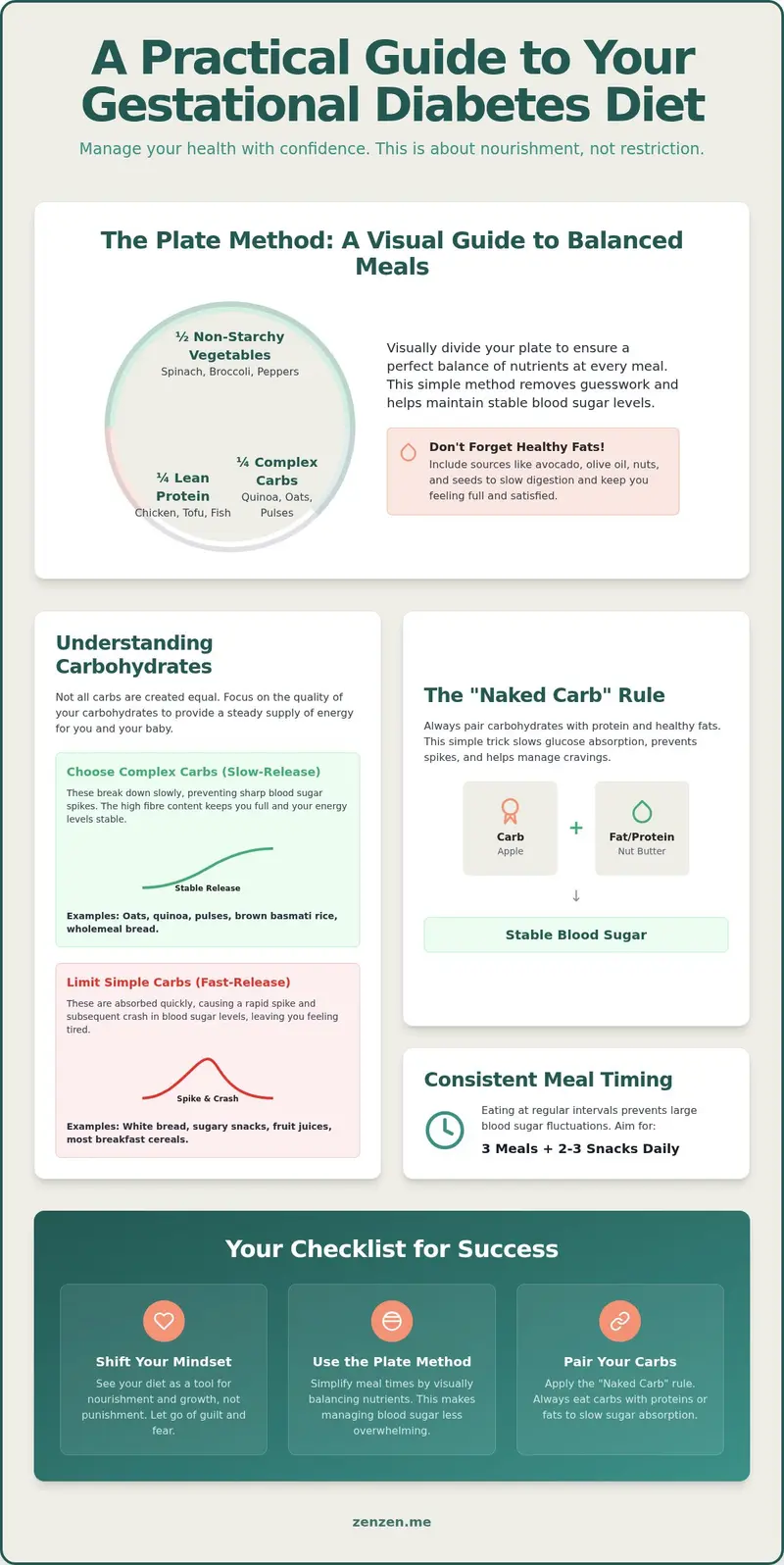
The easiest way to balance your meals is the Plate Method. It removes the guesswork from every lunch and dinner without needing a kitchen scale. Visualise your plate divided into three sections:
- Half your plate: Fill this with non-starchy vegetables like spinach, broccoli, or peppers. These are low in carbs but high in vital nutrients.
- One quarter: Add lean protein such as chicken, tofu, eggs, or fish to help you stay full.
- One quarter: This is for your complex carbohydrates or starchy vegetables.
Don't forget to include healthy fats. Adding a little avocado or olive oil further slows digestion, helping you maintain those target readings with ease. If you're feeling stuck on what to cook, a comprehensive recipe hub can offer plenty of inspiration that fits this model perfectly.
Why Timing Matters
Consistency is vital for a stable gestational diabetes diet. Eating three small-to-moderate meals and 2-3 healthy snacks throughout the day prevents your blood sugar from dipping too low or spiking too high. Skipping meals might seem like a way to keep sugar down, but it often backfires by causing your body to overcompensate. This is especially true for breakfast. Missing your morning meal can make it harder to manage the "dawn phenomenon". The dawn phenomenon is a natural morning rise in blood sugar caused by your body releasing stored glucose to prepare you for the day. Eating a protein-rich breakfast helps signal to your body that it can stop releasing that extra sugar, keeping you on a more even keel.
The Power of Food Pairing: Managing Spikes and Cravings
One of the biggest misconceptions about a gestational diabetes diet is that you have to say goodbye to fruit or bread forever. In reality, it's often not what you eat, but what you eat it with. Think of it as the "Naked Carb" rule: never let a carbohydrate travel through your system alone. When you pair a carb with protein or healthy fats, you change the way your body responds to that meal. You aren't just eating; you're strategically managing your energy.
The science behind this is simple yet powerful. Protein and fats delay gastric emptying, which means they slow down how quickly your stomach passes food into the small intestine. Because the process is slower, glucose enters your bloodstream at a steady trickle rather than a sudden flood. This prevents the sharp spikes that cause worry and keeps you feeling fuller for longer. It's a small shift that makes a massive difference to your daily readings.
How to Build a "Glucose Buffer"
Creating a buffer is about adding a protective layer to your snacks. If you fancy an apple, add a tablespoon of almond butter. If you're having wholemeal crackers, top them with a thick slice of cheddar or some creamy avocado. These additions act as a brake on your blood sugar levels. They turn a simple carbohydrate into a balanced mini-meal that supports your baby's growth without overworking your insulin.
Safe late-night snack pairings are particularly helpful if you find yourself hungry before bed. Try these combinations:
- A small bowl of full-fat Greek yoghurt with a sprinkle of seeds.
- Two oatcakes topped with cottage cheese.
- A handful of walnuts and a hard-boiled egg.
These options provide the nourishment your baby needs whilst keeping your morning readings stable. They help prevent that midnight hunger that can disrupt your sleep.
Satisfying Your Sweet Tooth Safely
Cravings are a natural part of pregnancy, and feeling deprived only adds to your stress. You can still enjoy sweet flavours by choosing lower-glycaemic fruits like strawberries, raspberries, or blueberries. These are packed with antioxidants and fibre, making them much gentler on your system than tropical fruits like mango or pineapple.
If you're dreaming of chocolate, reach for a small square of dark chocolate with at least 70% cocoa. Pairing it with a few nuts further blunts the glucose response. Whilst natural sweeteners like stevia can be a helpful alternative to sugar, focus on the quality of the whole food first. By learning to pair effectively, you can satisfy your cravings without the fear of losing control of your levels. You've got this.
Practical Tips for Stress-Free Meal Planning
Planning your meals doesn't have to be a full-time job. With a few simple habits, you can take the stress out of your gestational diabetes diet and reclaim your time. The secret lies in preparation. When you have a plan, you're less likely to reach for a high-carb snack out of sheer hunger or exhaustion. Let's look at how to make your daily routine feel effortless.
Reading food labels is a skill that gets easier with practice. Use this quick 3-step checklist every time you shop:
- Check the serving size: Manufacturers often list data for tiny portions. Ensure the serving matches what you'll actually eat.
- Look at total carbohydrates: This number matters more than just the "sugars" line, as all carbs eventually turn into glucose.
- Find the fibre: Aim for products with higher fibre content, as this helps slow down sugar absorption.
Batch-cooking is another lifesaver. On days when you feel energetic, prepare extra portions of "safe" meals like lentil soup or turkey chilli. Having these ready in the freezer prevents last-minute panic when you're too tired to cook. Don't forget the power of hydration, either. Drinking plenty of water helps your kidneys flush out excess glucose, which can lead to more stable readings throughout the day.
Smart Shopping for Gestational Diabetes
A well-stocked pantry is your best defence against spikes. Keep essentials like tinned beans, nuts, seeds, and whole grains on hand. These are versatile bases for quick, balanced meals. When you're in the dairy aisle, be cautious of products labelled "low-fat". Often, "low fat" means "higher sugar" to maintain flavour once the fat is removed. Choosing full-fat or reduced-sugar versions is usually a better way to keep your blood sugar steady whilst staying satisfied.
Eating Out Without the Anxiety
Socialising is still possible and should be enjoyed. When eating out, look for protein-heavy options. At an Italian restaurant, choose grilled fish or meat with a side of seasonal vegetables instead of a large pasta dish. For Indian food, tandoori meats are excellent choices, whilst pub classics like a steak or a bunless burger with a side salad work well. Don't be afraid to ask for modifications. Swapping chips for extra greens is a simple request that most places are happy to accommodate. Always check your levels after trying a new restaurant to see how your body responded. If you want to make this process even simpler, try easy blood sugar and carb logging to track your progress with ease.
Mastering Your Diet with ZenZen: Your Digital Companion
Managing a gestational diabetes diet shouldn't feel like a lonely uphill battle. You've already learned the mechanics of the plate method and the vital importance of food pairing, but real life doesn't always follow a textbook. There will be moments at a restaurant or a busy supermarket where you feel a flash of panic about a specific ingredient. This is where ZenZen becomes your steady companion. It's a real companion app designed to remove the guesswork, providing you with the digital tools to make safe choices in seconds. It transforms a complex medical requirement into a manageable, everyday habit that fits your lifestyle.
Instant Guidance with the Food Check Tool
One of the most stressful parts of this journey is the "what do I eat now?" moment. The Food Check tool solves this by offering actionable suggestions before you even take a bite. Instead of worrying about a potential sugar spike, you can check your meal idea and receive immediate advice on how to adjust it for better stability. Perhaps the app suggests adding a handful of nuts or swapping a side for a more complex grain. Logging your carbs and blood sugar becomes an effortless habit rather than a chore. This instant feedback builds immense confidence, especially for newly diagnosed mums who are still finding their rhythm amongst all the new information.
Expert Support When You Need It Most
Even with the best tools, you might occasionally see a reading that's higher than you'd like. It's easy to feel discouraged or fearful, but you don't have to process those feelings alone. ZenZen provides access to a personal GD expert who understands the emotional weight of your journey. Whether you need a quick answer to a dietary question or 24/7 emotional support after a stressful reading, help is always available through the chat. Your expert can even help you customise the extensive recipe hub to include your favourite flavours, ensuring your meals are both safe and delicious.
By combining technology with a human-first approach, the app ensures you never feel like just another statistic. You deserve to feel supported and empowered every single day of your pregnancy. You can find the clarity you need to focus on what matters most: your health and your baby. To take the next step toward a calmer, more confident pregnancy, download ZenZen to start your stress-free journey today.
Embrace Your Journey with Confidence
Navigating a gestational diabetes diet doesn't have to feel like a burden. You now have the practical strategies to balance your plate, pair your foods effectively, and handle cravings without the stress. Remember that every small choice you make is a powerful step toward a healthy baby and a more comfortable pregnancy. You've got the knowledge; now you just need the right companion to make it effortless.
You don't have to manage this alone. With the ZenZen app, you can use the Food Check tool to avoid sugar spikes and access 24/7 emotional support whenever you feel overwhelmed. Our personal gestational diabetes experts are always ready to help you tailor your meals to your life. Take the guesswork out of your daily routine and focus on the joy of meeting your little one.
Download ZenZen today for a personalised gestational diabetes meal planner and start your journey toward stable blood sugar with ease. You're doing a brilliant job for your baby, and we're here to support you every step of the way.
Frequently Asked Questions
How many carbohydrates should I eat per meal with gestational diabetes?
Most women find that 30 to 45 grams of carbohydrates per main meal is a helpful starting point. However, your exact needs depend on your activity levels and how your body responds to different foods. A successful gestational diabetes diet is highly personalised. It's better to focus on the quality of those carbs rather than just the number. Spreading your intake across three meals and three snacks helps keep your energy levels steady throughout the day.
Can I eat fruit on a gestational diabetes diet?
You can certainly enjoy fruit, as it provides vital vitamins and fibre for your baby's development. The key is to choose lower-glycaemic options like berries, green apples, or pears. These fruits release sugar more slowly into your bloodstream. Try to avoid fruit juices or dried fruits, as these are very concentrated sources of sugar. Always enjoy your fruit as part of a snack with some yoghurt or nuts to keep your readings stable.
What are the best snacks for gestational diabetes before bed?
The best bedtime snacks are those that combine a small amount of complex carbohydrate with plenty of protein and healthy fat. A small oatcake with a thick slice of cheddar cheese or a handful of walnuts with a few raspberries are excellent choices. These combinations help prevent your blood sugar from dropping too low overnight. This stability can often lead to better fasting readings when you wake up the next morning.
Is it possible to manage gestational diabetes with diet alone?
Many women successfully manage their blood sugar levels through a gestational diabetes diet and regular physical activity. It requires consistency and careful monitoring, but it is a very common outcome. If your healthcare team does recommend medication later on, please don't feel like you've failed. Some bodies simply need extra help with insulin resistance regardless of how perfectly you eat. The priority is always a safe pregnancy and a healthy baby.
Why is my fasting blood sugar high even when I follow the diet?
High fasting levels are often the most frustrating part of this journey because they are largely controlled by your hormones rather than your last meal. Whilst you sleep, your liver releases stored glucose to ensure you have energy to wake up. This is a natural process, but pregnancy hormones can make your body struggle to process that extra sugar. If your fasting numbers remain high, it's a physiological response that often requires professional guidance to manage.
Can I still eat bread if I have gestational diabetes?
You don't have to give up bread, but switching to high-fibre varieties will make a significant difference. Opt for stoneground wholemeal, seeded granary, or authentic sourdough, as these have a lower glycaemic index than white bread. Be mindful of your portion size and always add a "buffer" to your toast. Topping your bread with scrambled eggs, tinned sardines, or avocado helps slow down the digestion of the carbohydrates and prevents a sharp glucose spike.
What should I do if I have a sugar spike after a meal?
Don't panic if you see a high reading after eating. One single spike won't harm your baby; it's the long-term patterns that matter most. If your levels are high, try taking a gentle fifteen-minute walk to help your muscles use up the excess glucose. Drink some extra water to stay hydrated and make a quick note of what you ate. This information is incredibly useful for spotting patterns and adjusting your future meals with more confidence.
How long does it take for the diet to lower my blood sugar levels?
You will typically start to see more stable blood sugar readings within three to five days of consistently following a balanced eating plan. Your body needs a little time to adjust to the new rhythm of consistent carbohydrate intake. It's helpful to look at your readings over a full week rather than focusing on individual numbers. This perspective allows you to see the positive impact of your choices and gives you a clearer picture of your progress.